Vision Beyond Comfort: Why Vision Needs Space to Form
My Story
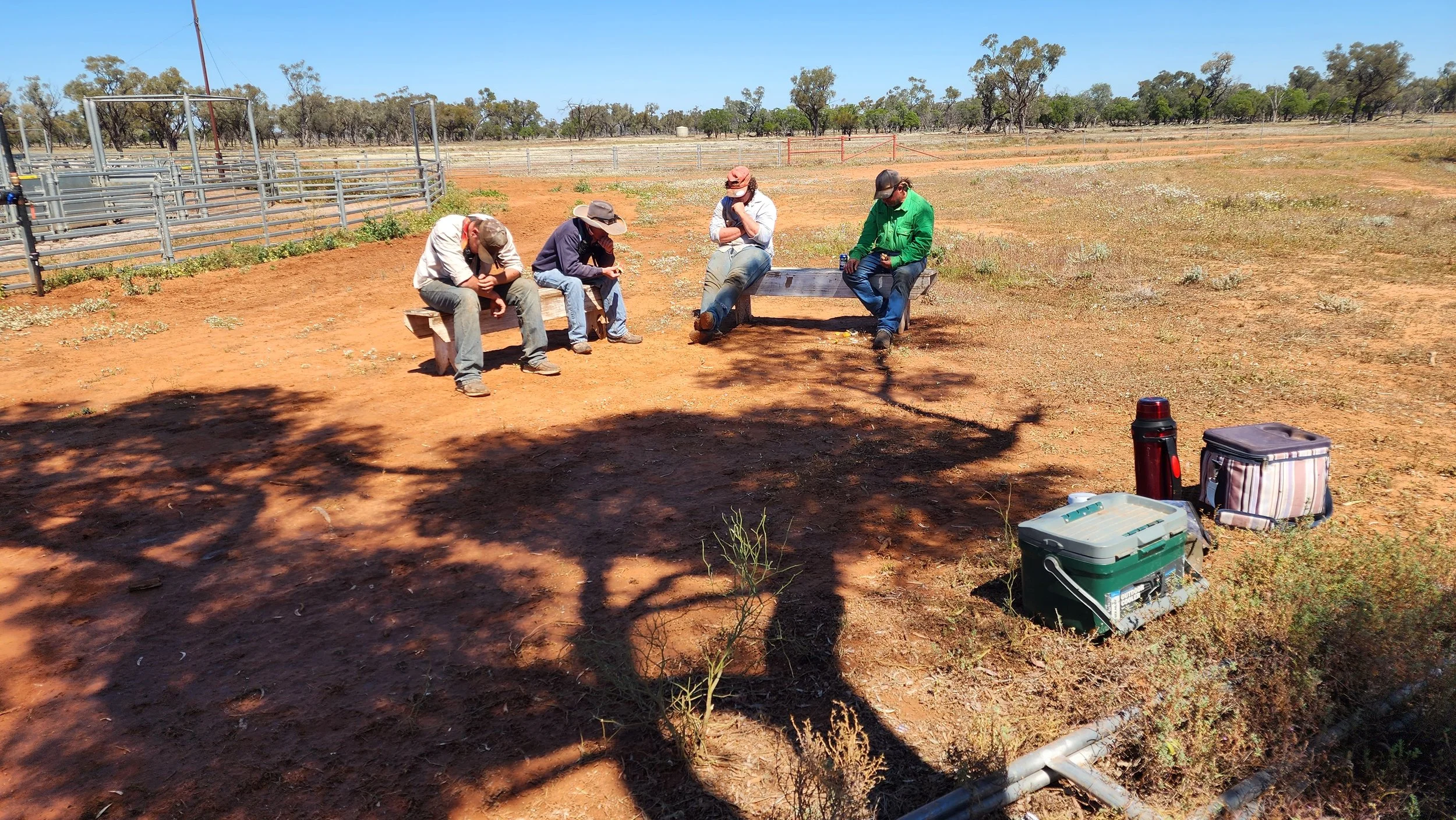
I recently spent time in the outback helping with the sheep muster and lamb marking. My job was simple on paper: provide three meals a day for a team of eight to ten people.
It was familiar territory. I cook a lot. But I am no chef, and for me cooking is usually how I relax. This was different. I was on my own for most of the day, and three meals needed to arrive on time, every time, at a standard that would keep a hard-working team going.
That is a different kind of pressure.
What surprised me was not the pressure. It was what the pressure made room for.
Out there, there was very little pulling at me. No constant notifications. No back-to-back meetings. No steady stream of small decisions competing for attention. Just the work in front of me and a lot of quiet space around it.
And in that space, my own sense of purpose became clearer than it had been for some time.
I realised something I often talk about with leaders but had not experienced so plainly for myself: vision needs space to form and embed itself.
Why we stay in the comfortable
Most leaders and business owners I work with are not short of ability. They are short of separation.
The day-to-day grind has a way of filling every gap. There is always another email, another issue, another person who needs something now. None of it is bad. Much of it is necessary. But when every hour is spent responding, there is no room left to look up and ask where we are actually heading.
Comfort is not always about ease. Sometimes comfort is simply the familiar rhythm of being busy. We know how to do it. It feels productive. It keeps us moving.
But movement is not the same as direction.
Without space, vision stays vague. We carry a loose sense of what we want, but it never becomes clear enough to shape our decisions, our priorities or the way we lead others.
Key lesson
Vision rarely arrives in the middle of the noise. It forms when we step far enough away from the familiar to see our situation differently.
Sometimes that means stepping into something uncomfortable. A new environment, a different challenge or an unfamiliar role can strip away the usual distractions and show us what really matters.
Practical application
You do not need to travel to the outback to create space for vision. But you do need to be intentional about it.
• Change your environment. Work somewhere different for a morning. Walk, drive, or sit somewhere without your usual cues.
• Choose something slightly challenging. A new setting that asks something of you can sharpen your attention.
• Reduce the pull. Turn off notifications and leave the laptop closed for a set period.
• Ask one clear question. For example: “What am I really here to build over the next three years?”
• Capture what comes. Write down your thoughts before you return to the usual rhythm.
Three learnings
1. Busyness can feel like progress while hiding a lack of direction. Being fully occupied is not the same as moving toward something that matters.
2. Discomfort can create clarity. When the familiar is removed, what is important often becomes easier to see.
3. Vision needs space before it can guide action. If we never create that space, our vision stays an idea rather than a direction.
Conclusion
My time in the outback reminded me that clarity is not something we can always force from behind a desk. Sometimes we need to step into a different place, carry a different kind of responsibility and let the quiet do its work.
Vision grows when we give it room.
If you have been feeling busy but unclear, it may not be a lack of ability. It may simply be a lack of space.
Famous quote
“Begin with the end in mind.” — Stephen R. Covey, The 7 Habits of Highly Effective People
Reach Out, and let's take time to discover how we can progress together.
Remember daily to, 'Find value in your influence.' Your voice matters, and I'm excited to hear from and work with you!"