My Story
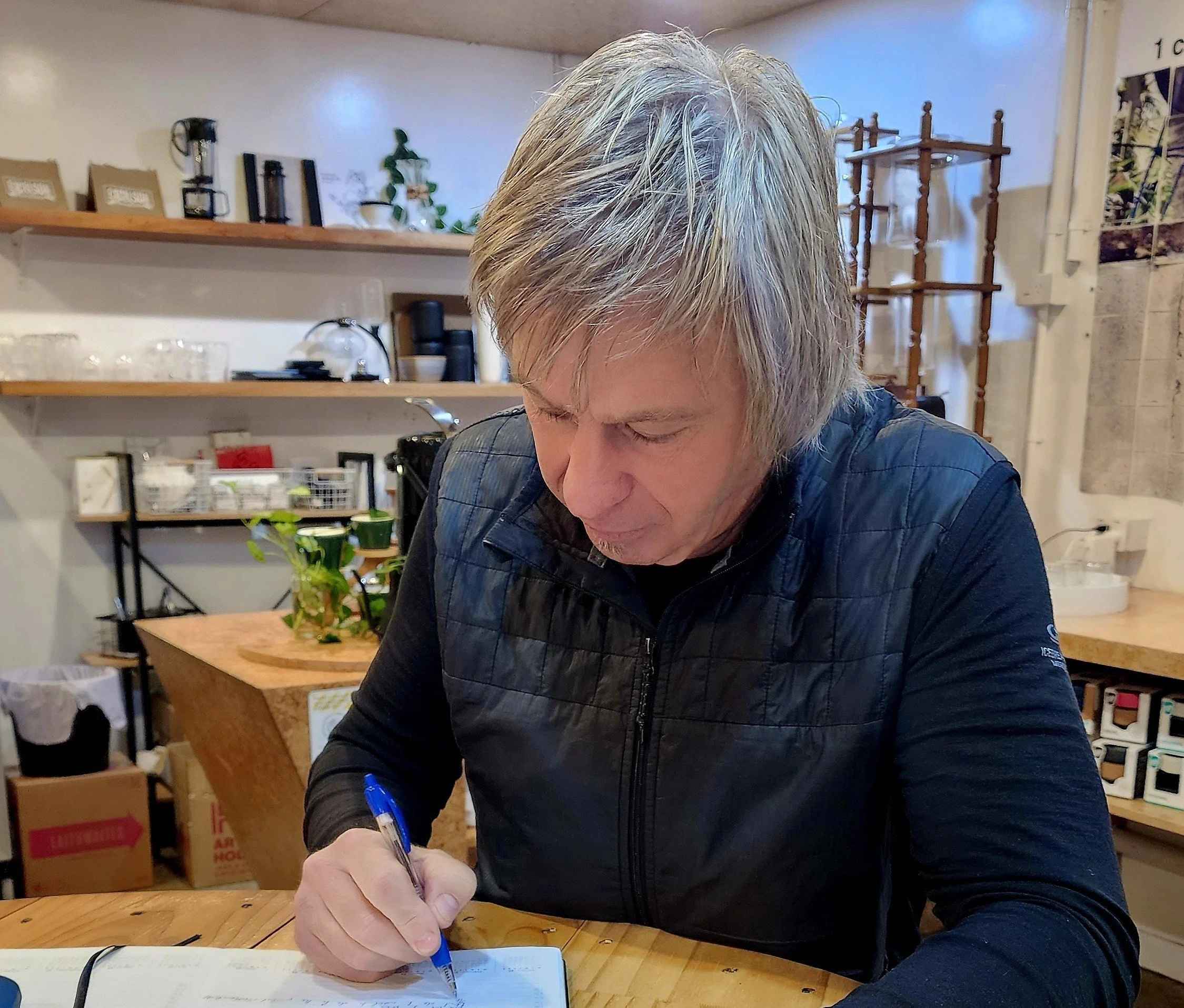
Every day I write the same question in my journal:
“Who or what can I be grateful for?”
It is a simple habit. It takes a few minutes. But over time it has become one of the most useful things I do.
The question does not change my circumstances. Some days are full and some days are hard. What it changes is my posture. It reminds me, before the day gets busy, to stay focused on being grateful.
And it has taught me something I did not expect.
The big things are easy
When something big goes well, gratitude comes easily. A new piece of work. Good news about family. A goal finally reached.
We notice those moments. We celebrate them. We tell people about them.
But the big moments are not the ones that fill most of our days.
Most of life is made up of small things. A conversation that went better than expected. Someone who held the door, made the coffee or checked in. A quiet morning. A message that arrived at just the right time.
In my experience, these small things are much harder to be grateful for. Not because they do not matter, but because we stop seeing them. They become ordinary. We expect them.
Small things often have the biggest impact
When I look back over my journal, the things I have written down are rarely big events.
They are mostly small moments and ordinary people.
And yet, when I think about what has shaped me most, it is often those small things. The steady encouragement. The everyday kindness. The people who simply turned up.
Big moments are memorable. Small moments are formative.
Key lesson
Gratitude changes perspective because it changes what we notice.
When we only look for the big things, much of life can feel like it is missing something. When we train ourselves to notice the small things, we start to see how much we already have.
That shift matters for leaders too. A leader who notices the small things notices people. They see the extra effort, the quiet contribution and the person who keeps things running in the background.
Why a daily question helps
Gratitude is not something most of us forget to feel. It is something we forget to look for.
That is why a regular question is so useful. It interrupts the habit of rushing past the ordinary. It asks us to stop, look back over the last day and notice what we might otherwise have missed.
Some days the answer comes easily. Other days I have to think harder. Those harder days are often the most valuable, because they push me to look beyond the obvious and find something good that was there all along.
Over time, the question starts to work in the background. I find myself noticing small things as they happen, not just when I sit down to write.
Practical application
Ask one question each day. Try “Who or what can I be grateful for?” Write your answer down.
Look small. Push past the obvious and name something ordinary that you would usually overlook.
Name people, not just things. Gratitude becomes more powerful when it has a face.
Read back over time. After a few weeks, look at what you have written. Notice the patterns.
Pass it on. When someone appears in your journal, consider letting them know.
Three learnings
Gratitude is a posture, not just a feeling. A daily habit keeps us pointed in the right direction, even on difficult days.
The small things are easy to miss. What becomes familiar can quickly become invisible unless we choose to notice it.
Small things shape us most. The everyday moments and people in our lives often have a greater impact than the big events.
Conclusion
I did not start journaling gratitude to change my perspective. I started because it seemed like a good habit.
But asking the same simple question every day has quietly changed what I notice. It has helped me see the small things, and the people behind them, more clearly.
If life feels like it is missing something, it may not be that you need more. It may be that you need to notice more.
This week, start with one question: “Who or what can I be grateful for?”
Famous quote
“Gratitude unlocks the fullness of life. It turns what we have into enough, and more.” — Melody Beattie
Reach Out, and let's take time to discover how we can progress together.
Remember daily to, 'Find value in your influence.' Your voice matters, and I'm excited to hear from and work with you!"